Showing posts with label business from home. Show all posts

Tuesday, 22 March 2016

How to Start a Business - The First Steps in Starting a Business

The internet has made starting a business from the comfort of your own home more possible now than ever before. Although there is nothing easy about being an entrepreneur, it is common knowledge that the outcome of starting a venture is very rewarding. The most difficult part is actually getting started. Some people have business ideas that never leave their notebook. Others just want to own a business but don't know where to start. Here are some steps to take in your early planning stages.

1. What are you good at? Not referring to what you would like to do but what are you good at now? Do people like your pumpkin pie? Are you a really great accountant? Do you have team building skills that are out of this world? Sometimes we take our own talents for granted because we use them everyday. However, talents can turn into marketable skills that people will pay for.

2. How do you intend to fund your business? Nothing in the world is free. It takes money to make money. Starting a business will need investing. Don't let having a small amount of capital or not having any capital at all stop you from moving forward. You will invest lots of time when there is not that much money. Having large amount of money to invest still requires time in due diligence to make sure you are hiring the right team to get the job done.

3. Dead set on becoming an entrepreneur but don't think you're good enough at anything? Everyone has a skill set, you just haven't identified yours yet. Think about things that you like and consider start a home based business that offers these things. Home based businesses, also known as direct sales or network marketing, link personal development and growth directly with success. With a small investment, usually less than $500, you can have a ready-made business and become profitable in days. The hugely successful in direct sales usually venture off and start businesses of their own after discovering their hidden talents, learned how to run a business, and now have earned enough money to invest in themselves. Direct sales is a great place to start.

Becoming an entrepreneur is not a journey for the faint at heart. It all starts with an idea, just like anything else. Figure out what your skill set is and focus on turning something that you're good at into a business. Decide how you can invest into your business. Be it time or money, you will have to invest something. If you do not think you have any business ideas, start with a network marketing company to jump-start your business juices.


http://ezinearticles.com/?How-to-Start-a-Business---The-First-Steps-in-Starting-a-Business&id=9297876

Tuesday, 1 March 2016

Dream Big, Start Small

When starting a business, every entrepreneur dreams of the time the business will grow to be successful and bring in all the big bucks. However, it is not as easy as it sounds. The reality of starting a business is that there will be times of despair, when business is slow and you feel all hope is lost. There will be times when you will have doubts about why you got into business. Entrepreneurship is glamorised and the psychological price of entrepreneurship is rarely ever discussed.

You have to view entrepreneurship or building a business like a child learning to walk. The child will initially fall and stumble, likely graze his knees before he gets the hang of it. Gradually, he can walk and even run.

Business is the same way; in the early days your services may not gain traction in the marketplace and sell quickly, or you may make mistakes along the way that will threaten the existence of your business, or you may have days when you would have to chase after customers before things begin to pick up and move smoothly.

So what is the best way to go through this trying period?

Start small

Start as small as possible. In other words, establish what your minimum viable product (MVP) is. This refers to the most basic version of your product or service that you can offer. It gives you the opportunity to understand what your market wants and improve from there.

Move fast and break things

This simply means, "don't be afraid to try new ideas and be disruptive". Try new ideas and fail fast. If you fail, learn the right lessons and move on fast. In fact, it is one of the advantages to being small - you can implement new ideas quickly.

Secure cash flow quickly

Contrary to belief, profits aren't the key to sustaining a business. It is cash flow. How consistent is your revenue? If you are able to achieve consistent cash flow, profits are not far off.

Treat your customers like king

This is more than just a cliché. It is very important that you offer the best customer service possible. Doing this will make them more than just customers; it will make them your ambassadors.

Fine-tune your company culture and leadership skills

Your company culture means how you do things as a company, your processes, and your interactions among you, your staff and suppliers, among others. If you are unable to get it right when the company is small, it will even be harder as the business grows.

Learn as much as possible about every aspect of the business at this stage

The times will come when the business will be too big for you to micromanage like this, and if there are aspects of it you do not understand, you will have a management crisis waiting to happen.

Implementing the above will able to you to build a structure to enable you to dream big, but start small to help the company grow well.


http://ezinearticles.com/?Dream-Big,-Start-Small&id=9328583

Tuesday, 4 November 2014

Selling Food and Drink Online: Product Descriptions Top Tips

Selling food and drink online can sometimes mean exercising creative muscles you might not have used in a long time. If writing about your products isn’t something that comes naturally, fear not! We’ve put together some top tips for writing product descriptions – inspiration guaranteed.

Whether you’re about to start selling online for the first time or thinking of fine-tuning your existing online shop, here are 5 key tips to help you overcome that dreaded writers block.
 
1. Who are you writing for? 
Girl Eating - Yumbles FoodpreneursIf you’re an established business or are used to selling face-to-face, you might already have a clear picture in your mind of who your target customer is. Perhaps your typical customer is a health-conscious foodie who knows her shallots, or the discerning husband shopping for the perfect birthday gift for his  (incredibly lucky) wife?
Having a clear idea in mind of who you’re writing for before you get started and this will make the whole process of writing product descriptions much easier.
If you don’t have any direct experience to draw from, who can you imagine buying your products online? Who would your dream customer be?
 
2. Answer their questions 
Now that you have an image of your customer in your mind, imagine what would be going through their head before buying your product online. What would they want to know? What questions would they have? The health-conscious foodie might want to know about the exact provenance of your ingredients and suitability for her special diet. While the gift-hunting husband might be more concerned about whether your will arrive in drool-worthy packaging (and, whether you can save his bacon by delivering the goods on time).
Make a list of questions you think your customer might ask, and ensure you answer these key points in your product copy.
 
3. Know what makes you different 
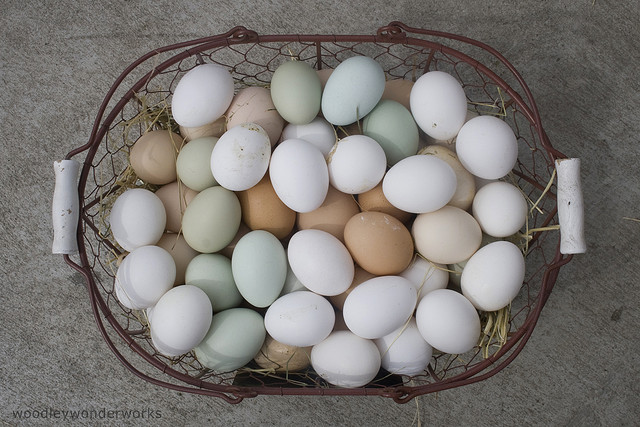
WoodleyWorks on Yumbles FoodpreneursWhen you’re selling food or drink you’ve produced yourself, it’s sometimes easy to take the small details for granted. Of course you bake your biscuits using traditional techniques! Of course your eggs are free range! Why wouldn’t you use British butter, organic flour, hand-decorate your creations…..and ship them in a hand-illustrated box?!
These exquisite details can make all the difference when it comes to differentiating your products and standing out from the crowd online. So don’t forget to include them when writing product descriptions for your shop.
 
4. Don’t be afraid to sell
Remember that when buying online, customers don’t have the opportunity to pick up, smell or taste your wonderful creations. So while it’s absolutely true that your product photographs have a crucial role to play in grabbing browsers’ attention and showing off your wares, your product descriptions need to fill in any gaps. Imagine you’re selling face-to-face at a fair or market – what would you be telling potential customers there?
Whether it’s suggestions for how to use your product, the fact it’s a Great Taste Award Winner or sharing praise other customers have lavished on your range – don’t be afraid you’re being “salesy” – just tell it like it is.
 
5. Tell stories
Cloud Nine MarshmallowsFor many shoppers, buying from independents (whether online or offline) is a deliberate lifestyle choice. Many will want to support small businesses and value all the little details that make buying from you a special experience they just won’t get from a larger retailer. So don’t miss the opportunity to give these customers what they want! Use your product descriptions to paint a picture and draw potential customers in.
Whether it’s the fact you make your gourmet marshmallows in small batches from your family kitchen in Cornwall or that you’re a fourth generation cook using recipes handed-down by your Great, Great Granny….. if stories form an important part of your brand,  weave them throughout your shop.


Thursday, 18 September 2014

Cafe Culture Enjoys Homemade Success

 
FISH finger sandwiches are rarely found on the menu of a city centre cafe – but that is what makes one deli stand out from the crowd.
Homemade, in Pelham Street, Hockley, is a quirky hideaway which fuses traditional homely grub with one or two surprises.
The lifelong dream of owner Jasmin Barlow-Wilkinson, it has been drawing in the crowds since it first opened its doors nine years ago.
The cafe is now in the running to win the Post and Nottingham Business Improvement District's competition to find the best independent business in the city, after being nominated by customers.
The contest, now in its third year, is designed to discover and celebrate the best independent retailers across the city for 2014.
For Jasmin, the key to Homemade's success is its "feel good, family-friendly" vibe.
The name perfectly sums up what Homemade is all about – food made from scratch that makes people feel at home..
The 35-year-old said: "When people come here they know what they're getting – we're not trying to be something we're not.
"Our feedback is really positive – we've got a great army of Homemade fans who tweet about us and write nice things on Facebook."
But far from being a "hipster hangout", Homemade attracts people from all walks of life.
Jasmin added: "Sometimes you'll look in the cafe and see some guys having a business meeting, some students celebrating the end of exams, some yummy mummies sitting with their babies and two old ladies having some tea and scones.
"It's always a real mix. But that's what's great about Homemade – there really is something for everyone."
Jasmin, who started cooking at the age of four, is passionate about food.
Her decision to open a city centre cafe has paid off, and there are now two other Homemade cafes in Sherwood and on The Forest recreation ground.
She said: "Having independent businesses is really important to any city.
"It gives it that USP and unique quirkiness.
"Brighton is one of my favourite places, where the independent shops outweigh the chains. I think that's what Nottingham could become.
"It's taken a while, but there are now more and more independent shops in prominent places, which is great."
Homemade Pelham Street cafe manager Jessica Buckley, 25, says being able to take the establishment in new directions marks it out from some of its high-street rivals.
She said: "I worked at Tesco for six years and left because I wanted to come to an independent company.
"I really feel like we're making more of a difference here – it's much more personal and I can actually make decisions that change the direction of the company by listening to what customer want.
"We've got so many regulars that we know so well – a lot of them have become friends."
Customer Harriet Shaw, 21, visited Homemade after hearing good things.
She said: "I love quaint little cafés like this – it has such a nice feel to it.
"I much prefer going to individual places like this than going to one of the chains.


Wednesday, 27 August 2014

Starting a Home-Based Food Production Business: Making Your Culinary Hobby Your Job

 
If it is your passion to reap the rewards of your culinary skills by starting an at-home catering or food business, you can find yourself at the center of a very rewarding form of business ownership.
In addition to providing the flexibility of a work-from-home business model, it can also offer a low risk entry into the competitive and ever-popular restaurant and food service business industry. And, it will allow you to learn the ropes at your own pace, in the familiar surroundings of your own kitchen! Take Martha Stewart, for example: She famously entered the food service business with a basement-based catering company in 1976. From there she quickly branched out and opened a gourmet food store, before entering the media industry and becoming one of the most successful lifestyle brands in the U.S.
Of course, before you start a home-based food business you will need to understand the rules and regulations that govern the production of food for public consumption in an at-home environment. For example do you need a separate kitchen? What about product labeling? And so on.
You'll also need to pay attention to the basic legal and regulatory requirements that all small business start-ups have to address (registering your business, getting a tax ID, e-commerce, etc.). And lastly, do you need financing for your venture?
All this can seem overwhelming, so here are five steps that you can follow that will help comply with the rules and regulations that govern home-based catering or food production businesses:
 
1. Ensure that You and Your Home Are Properly Equipped for the Business of Food Production
While this isn't necessarily your first step as a home-based food business owner, it is something you will need to consider before you kick-off your new venture.
If you already know what product(s) you intend to produce, ask yourself if you have the right equipment with which to adequately prepare, cook, store and transport your product. Will you need to invest in a separate kitchen or additional equipment to scale to your business needs (many states forbid the use of residential kitchens for commercial food production)? How do you intend to support the ebb and flow of production? Are you willing to hire employees? And, once you share control of food production, how will you ensure consistent quality standards?
Some local governments also restrict at-home commercial food production, so be sure to check out local zoning laws and contact your local Public Health Department.
 
2. Finance your Home-Based Food Business
While starting a home-based food business can be low risk, you may need to consider available financing options to help cover your start-up equipment or other asset costs. The government's Small Business Administration (SBA) offers a variety of loan programs - it won't lend you the money, but the government does provide a guaranty to banks and lenders for money lent to small businesses. A great option is the SBA's Microloan program, which guarantees loans up to $35,000 but typically averages $13,000. Find other loans using the government's Loans and Grants Search Tool.
 
3. Register and License Your Home-Based Business
Once you are ready to start your business venture, you will need to take the appropriate steps to 'register' your business with your state and county government; obtain appropriate food service and general business permits; as well as register with the IRS. The government (through SBA.gov) provides a lot of guidance on making sure your new business is operating legally; check out this guide on Steps to Registering a Business.
 
4. Understand the Regulations that Govern Food Production
Aside from ensuring that you can produce food for commercial purposes from your home, you will also need to understand and comply with a variety of laws that govern food preparation, food safety, product packaging and labeling, etc. At the local level, your county's Public Health Department is responsible for regulating commercial food production activities, and regulations vary from jurisdiction to jurisdiction.
If you produce a food product that is shipped across state boundaries then the FDA and Department of Agriculture both provide compliance guidelines. For an overview of federal regulations that affect this industry, check out the resources on Business.gov's Restaurant and Food Service Business Guide or visit www.foodsafety.gov.
 
5. Marketing Your Food Product or Services Online
If you intend to accept orders or even just advertise your food service business online via a Web site, there are a few government laws that you'll need to follow with regard to e-commerce, sales tax, truth in advertising, data privacy, and so on. Find out more at Business.gov's Online Business Compliance Guide.
So these are five basic steps you need to consider before embarking on a home-based commercial food production or catering business. Since much of the regulation is at the state level it's worth talking to a small business expert in your community to get practical advice. The SBA has local offices across the country; Small Business Development Centers and SCORE (link is external) can also help you get started.
 

Monday, 23 June 2014

Q&A: Setting up a home-based business

Starting your business from your home can be one of the most effective ways to keep your overheads down. Emma Jones of Enterprise Nation and StartUp Britain answers some questions about how to get it right.

Is starting a business from home still popular?

It’s the most popular option. More than 60% of people who start a business are now doing so from home. From fashion design, IT and catering through pet care and arts/crafts to accountancy and legal services – you name it – it’s being run as a business from someone’s home.

What are the key advantages of operating from home?

It’s low cost and therefore less risky, because there aren’t any expensive premises overheads. You can also claim for a percentage of your domestic bills, for lighting, heating, telephone calls, etc. A home office means no commute, so you save money and time. Cutting out a daily commute of 60 minutes each way frees up one whole extra day each week. That day can be spent earning money or with family/friends or enjoying leisure time.

Can a home-based business employ people?

Absolutely. The same employment rules apply and interestingly, because of such regulations, some home-based businesses are outsourcing and sub-contracting, rather than taking on staff. If you have people working in your home premises, you must carry out a proper health and safety risk assessment and be sure to find out about employment law.

But can’t the lines between work and home become blurred?

Possibly, if you don’t remain disciplined. People need to think about how the business will affect their home life – and vice versa. I recommend creating a dedicated work area, possibly a spare room, garden shed, attic or space under the stairs. This way, when you’re in that space everyone knows you’re working. And you can close the door at the end of the day and leave work behind.

Running a home-based business isn’t an easier option?

Not necessarily, no. When you’re starting out, you’ll need to put in the hours if you’re to make sales, keep customers happy and stay on top of your admin. Plus, there will be domestic responsibilities to take care of. Basing your business on something you enjoy helps. That way it doesn’t feel like work so much.

What other legislation applies to home-based businesses?

To run certain businesses, you must seek a licence. Also, you’ll need planning permission if you want to make significant changes to your property. This could be opposed. You can also run into problems if you become a nuisance to your neighbours, for example, through strange smells, excessive delivery or customer vehicles. And whether yours is simply a small sole trader business, or even a part-time venture, you must inform HM Revenue & Customs or register with Companies House. All earnings must be declared, of course.

What about insurance?

You can add a business element to your home insurance – it doesn’t cost much extra. It’s better to be protected. You should also inform your mortgage provider or landlord, as some agreements prevent people from running a business from their home without first seeking permission.

Is there any need for additional security?

As long as you already have good quality locks on doors and windows, maybe an alarm, you should be fine. You might need to take additional steps, if, for example, you’re planning to hold valuable stock or handle cash.

Sounds like you enjoy running a home-based business...

I do. Every day is different and one of the most wonderful things about being your own boss is the feeling of being in control, yet you still don’t quite know what tomorrow will bring.

http://www.startupdonut.co.uk/startup/business-premises/q-a-setting-up-a-home-based-business